Isuzu Motors South Africa revealed that it has invested nearly R30 million into its commercial vehicle assembly plant in the Eastern Cape.
The Japanese carmaker’s local division said that it is committed to the South African market and will continue to grow its manufacturing capabilities while supporting the country’s industrial and economic goals.
Isuzu, best known for the popular D-Max midsize bakkie series, has a factory in Gqeberha (formerly Port Elizabeth) that produces a range of commercial vehicles.
The company said the investment will improve production at its facility, helping Isuzu to remain competitive while responding to the needs of customers in South Africa and across the continent.
“The investment introduces targeted upgrades across the commercial vehicle assembly operation to enhance manufacturing capability and efficiency; strengthen quality and digital traceability; improve employee safety and ergonomics; and support more sustainable, future-ready production,” it said.
“This investment is about more than preparing our plant for a new generation of trucks. It reflects our long-term vision for manufacturing in South Africa and our confidence in the country’s people, industrial capability and potential,” said Johan Vermeulen, Executive Vice President: Manufacturing and Product Engineering at Isuzu Motors South Africa.
“By continuing to invest in our Gqeberha operations, we are strengthening the capability and capacity needed to remain competitive and respond to the evolving mobility needs of customers across Africa.”
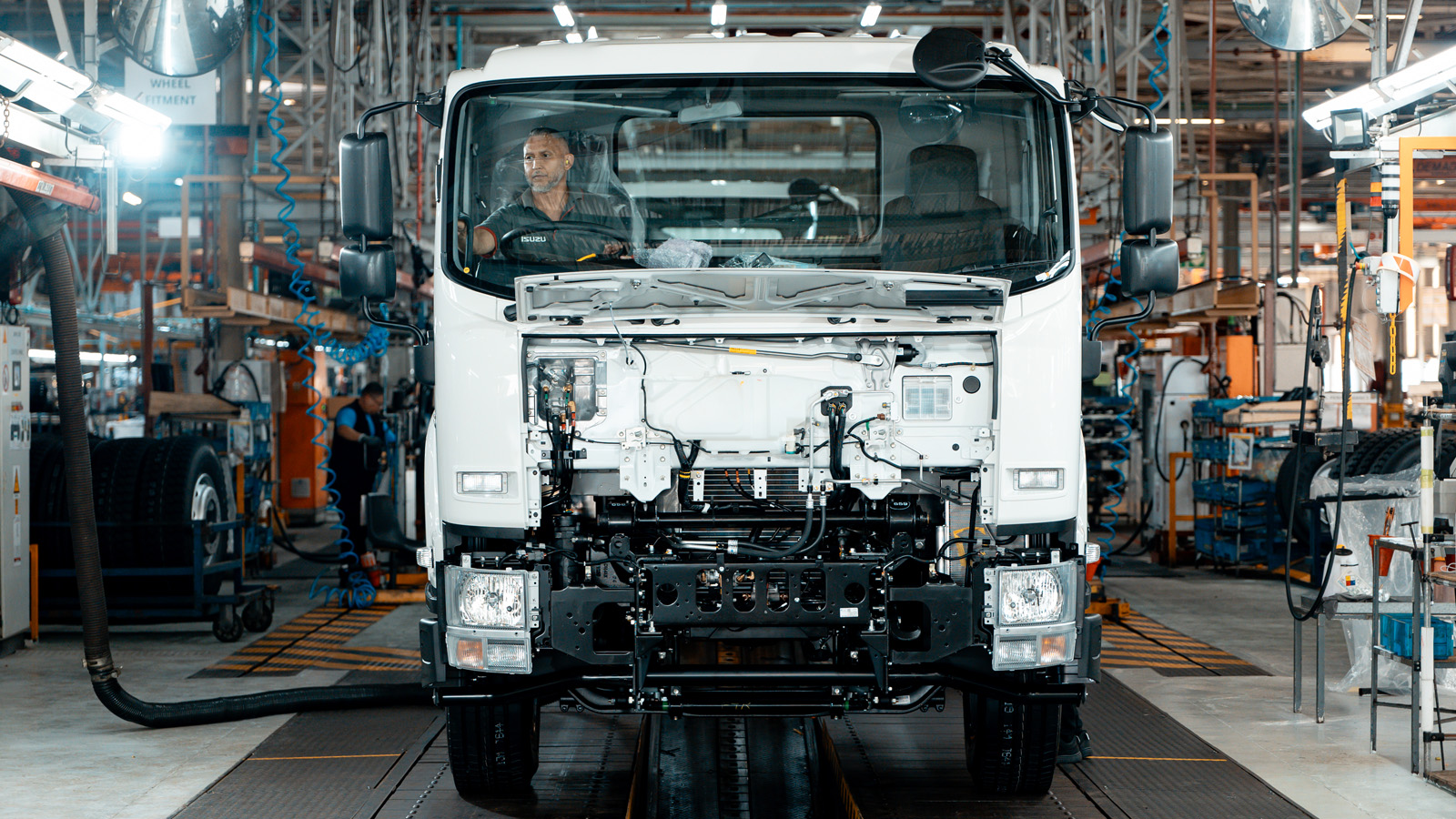
Isuzu has made upgrades to the chassis and engine sub-assembly areas and cab marriage, improving the plant’s operational flexibility.
The extended chassis line allows the factory to accommodate additional stations for added content. Additionally, the automaker has updated tooling and optimised its production layouts to improve the plant’s ability to support a broader range of commercial vehicle applications.
Isuzu added that the investment includes new production and technology enhancements meant to reinforce consistent build quality.
Employees are also benefiting from the investment, as Isuzu made safety and ergonomic improvements to the equipment selection, workstation design, lighting, and workflow.
“New equipment, including a fuel-tank gripper, lift-assist devices, cab-marriage hoist, electronic torque tools, together with enhancements to the engine-dress process, is designed to reduce physical strain and support safer and more efficient working conditions for employees,” said the company.
Isuzu also revealed that it has taken sustainable manufacturing practices into account, implementing more energy-efficient tools and improving workflow to use resources more effectively.